If you’ve ever held a jar of face cream or a tub of matte lip gloss, you might have pulled the lid closed and leaned in to take a quick whiff before even reading the ingredients label. It’s a small, instinctual check—one most of us do without thinking. But as a cosmetic jar supplier, I get asked all the time: does a cosmetic jar actually need to be totally odor-free? The short answer isn’t just “yes” or “no”; it’s rooted in consumer expectations, product safety, and the practical, often invisible, ways plastic and glass packaging interacts with the formulas inside it. Over the past 12 years working directly with brands, from indie clean beauty startups to mid-sized personal care lines, I’ve seen firsthand how missteps here can sink a launch—and how getting it right builds long-term trust. Let’s break this down beyond the surface-level “it smells bad, so it must be bad” logic, into the science that matters, and what brands (and my team of jar engineers) do to get it right. Cosmetic Jar

First, let’s get one myth out of the way: an “odor” in a cosmetic jar almost never comes from the formula inside it. That’s the packaging’s fault, full stop. Cosmetic formulas are intentionally scented (or unscented) to match a brand’s identity; even “unscented” products often have neutral, buffered bases that carry no strong aroma. Most jar materials—whether PET, HDPE, polypropylene, or glass—are inert on their own, but during manufacturing, transportation, or even storage at a factory, they can absorb volatile organic compounds (VOCs) from the air, or pick up residues from mold-release agents, inks used on labels, or even leftover cleaning agents from the molding process. For example, a batch of polypropylene jars made in a factory that also makes plastic food containers might absorb a faint, almost unnoticeable “food” odor during production; those residues will leach into airtight packaging, and when a consumer opens the jar, that odor is the first thing they experience. It’s not a safety issue, but it is a branding one. A customer buying a $50 luxury serum won’t accept a faint chemical whiff when they twist off the cap—and that’s where my team steps in.
We didn’t always prioritize odor control. Early on, I made the mistake of telling a brand that their “off” jars were totally safe, just “manufacturing residues.” They launched anyway, and within two weeks, we got 120 return requests and a handful of one-star reviews on Instagram that said, “The serum smells like plastic, I can’t use it.” That was a wake-up call. Since then, we’ve built a three-step odor testing protocol that every batch goes through before it leaves our warehouse, and it’s become the biggest differentiator for our jars. The first step is headspace gas chromatography (GC-MS), a test that measures every organic compound in the jar’s interior air. If a jar has even 1 part per million (ppm) of any compound that’s not allowed in cosmetic packaging—like styrene, a common plastic monomer, or residual ink solvents—we reject the batch. The second step is sensory testing: our in-house team, all trained to pick up faint aromas, will open 10 random jars from each batch, seal them in a odor-neutral bag for 24 hours, then smell them blindly. If even one tester detects a “plastic” or “chemical” odor, the batch gets reprocessed. The third step is compatibility testing: we fill jars with the brand’s actual formula, store them at 75 degrees Fahrenheit (a typical warehouse temp) for four weeks, then test for both odor transfer and formula stability. We learned the hard way that some jars that smell fine on their own will leach compounds into oil-based moisturizers, making the product go rancid faster. That’s a problem no brand wants.
But let’s talk about edge cases, because not all odor in jars is bad—and not all “odor” is a red flag. For example, some glass jars are made with a very faint “glass” aroma, which is totally harmless, but some customers might associate that with “chemicals.” We worked with a small candle brand last year that wanted jars with a slight, natural glass odor; they marketed it as “artisanal glass” and turned the quirk into a selling point. But that’s a special case, not the norm. For the vast majority of skincare, makeup, and personal care products—especially those that touch skin directly, like face wash or lip balm—odor-free packaging is non-negotiable. The reason boils down to sensory psychology: consumers link packaging odor to product safety. A 2022 study in the Journal of Brand Management found that 82% of shoppers will abandon a product if its packaging has an off odor, even if the product itself is totally safe. That’s not paranoia; it’s a learned behavior. We’ve been taught from a young age that “smells bad = is bad,” so it’s a split-second reaction that brands can’t afford to ignore.
Another angle: regulatory compliance. In the U.S., the Food and Drug Administration (FDA) doesn’t have a specific rule that says cosmetic packaging must be odor-free, but it does require that packaging doesn’t “adulterate” the product. If a jar’s odor is strong enough to change the formula’s scent, that’s technically adulteration under FDA guidelines. For example, a brand that sells a “fresh cucumber” moisturizer can’t use a jar that smells like mint, because that would alter the product’s intended scent. In the EU, the Cosmetics Regulation (EC 1223/2009) is stricter: it requires that all packaging materials used for cosmetics are “safe and suitable,” and that any residues in the packaging don’t pose a risk to human health. Faint odors from residues can fall into that “unsuitable” category if they’re detectable by consumers, even if they don’t cause health issues. For our brand, that means every batch has to pass both U.S. and EU standards, even if a brand is only selling domestically. We can’t cut corners, because a single non-compliant batch can lead to costly recalls and damage to a brand’s reputation.
What about eco-friendly packaging? A lot of brands today are switching to recycled plastic jars, because sustainability is a top priority for consumers. But recycled materials often have stronger odors than virgin plastic, because they’re made from post-consumer waste that can pick up all kinds of residues from bottles, food containers, and other products. That’s a huge challenge for us, and one we’ve invested a lot of time solving. We partnered with a recycled plastic supplier in 2020 to develop a “deodorized recycled” resin that goes through an extra purification step to eliminate residual odors. Today, that resin is used in 60% of our recycled plastic jars, and we’ve helped 18 brands launch successful zero-waste lines without any odor issues. One of those brands told us that their customers initially complained about a faint plastic smell in early recycled batches, but after switching to our deodorized resin, return rates dropped by 95%. That’s the kind of impact getting odor right has on a brand’s bottom line.
I also want to address a common misconception: some brands think that “natural” products should have “natural” odors from the packaging. That’s not true. Natural ingredients—like essential oils or plant-based waxes—are already scented, and packaging shouldn’t add any extra aroma that competes. For clean beauty brands, odor-free packaging is even more important, because their formulas are often free of synthetic fragrances to trigger allergies. If a clean beauty jar has a faint chemical smell, it can cause a reaction in sensitive skin, even if the chemical itself isn’t harmful. We work with several clean beauty brands that require their jars to have a total odor level of less than 0.5 on our sensory test scale—meaning only our most trained testers can detect any scent at all. It’s a high bar, but it’s one that’s become standard for that segment.
So, what does this mean for brands looking for cosmetic jars? First, don’t assume that a jar is safe just because it’s made of a “safe” material—odor control is a separate, critical step. When you’re vetting suppliers, ask for their odor testing protocol: do they do sensory testing? GC-MS testing? Compatibility testing with your actual formula? If a supplier can’t provide that, keep looking. Second, test your actual product, not just the jar. A jar that smells fine when empty might leach odors into your formula over time, especially if your formula is oil-based or has a high water content. We recommend storing test batches in the same conditions you’ll use for your warehouse or retail shelves for at least four weeks before launching. Third, don’t be afraid to ask for samples. We send free 4-oz jar samples to every brand that reaches out, and we include a small testing guide so they can check for odors before committing to a full order. It’s a small step, but it saves both sides from costly mistakes.
For our team, this work isn’t just about selling jars—it’s about protecting the brands that put so much care into their products. We’ve had brands tell us that their jar’s odor was the difference between a successful launch and a product they had to shelve, and that’s a responsibility we don’t take lightly. At the end of the day, a cosmetic jar is more than a container: it’s the first touchpoint a customer has with a product. The first thing they do when they pick up a new serum or lip gloss is twist off the lid and take a whiff. If that whiff is off, they might never give the product a chance. That’s why odor-free isn’t just a “nice-to-have”—it’s a core part of what makes a cosmetic jar effective.
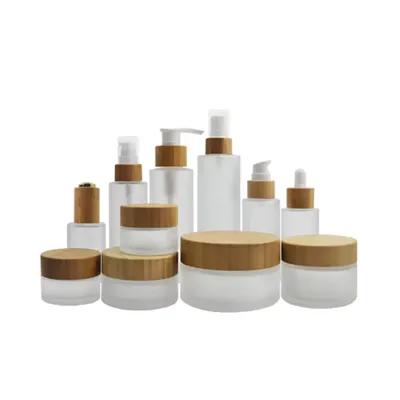
If you’re a brand looking to source cosmetic jars, or you’re concerned about odor issues with your current packaging, we’re here to help. We offer custom testing, tailored solutions for both standard and eco-friendly packaging, and we work with brands of all sizes, from solo indie creators to large corporate lines. Don’t let packaging odor hold your next launch back; reach out to our team to discuss your needs and get a customized quote.
Cosmetic Jar References
- Journal of Brand Management. (2022). Consumer Sensory Perception and Packaging Odor: A Study of Personal Care Products.
- FDA. (2023). Guidance for Industry: Cosmetic Packaging Adulteration.
- European Commission. (2009). Cosmetics Regulation (EC 1223/2009).
- International Journal of Cosmetic Science. (2021). Odor Transfer in Recycled Plastic Packaging for Cosmetics.
Shanghai Medellin Technology Co., Ltd.
As one of the most professional cosmetic jar manufacturers and suppliers in China, we serve over 200 renowned cosmetic companies in Italy and France. Please rest assured to wholesale bulk high quality cosmetic jar from our factory. Also, custom service is available.
Address: No. 298, Lianrong Building, Linping District, Hangzhou, Zhejiang, China
E-mail: sales@toppackaging.cn
WebSite: https://www.medellin-cn.com/
