Hey there, thanks for stopping by! If you’re reading this, you’re probably working with CA land transport refrigerated containers (that’s reefers for short) and are stressing about getting them where they need to go—without turning your perishable goods into a science experiment gone wrong. I’ve been in this game for over a decade, supplying these bad boys to businesses all across North America, and let me tell you: hauling a reefer isn’t just hooking up a trailer and hitting the gas. Mess up the transport part, and all that money you spent on temperature-controlled cargo goes right down the drain. Today, I’m breaking down exactly how we do it here—no fancy jargon, just the same tricks we use every single day to get reefers from our yard to your dock, safe, sound, and still keeping their cool. CA Land Transport Refrigerated Container

First off, let’s get one thing straight: CA land transport refrigerated containers aren’t your average storage unit. They’re basically mobile cooling (or heating) systems on wheels, with a whole bunch of tiny parts that go bad if you don’t handle ‘em right. I see guys trying to cut corners all the time—skipping pre-transport checks, yanking power cords wrong, speeding down the highway like they’re in a race. That’s how you end up with a unit that won’t hold temp, or even worse, a breakdown in the middle of nowhere with a load of strawberries or pharmaceuticals about to spoil. So step one, and I can’t stress this enough, is pre-transport prep. This isn’t something you can wing. We spend at least 45 minutes on every reefer before it leaves our lot, and you should too.
Let’s start with the basics: the structural check. First, walk the entire perimeter, top to bottom. Look for dents on the corner castings—those are the little metal blocks at the corners that hook to the trailer’s locking system. A bent casting can make the unit wobble on the road, and trust me, that adds up to wear and tear that’ll kill your compressor over time. Next, check the door gaskets. That rubber seal around the doors? If there’s a tear, a crack, or even a spot where it’s not sticking right, you’re losing cold air faster than a kid loses candy. Run your hand along it slowly—if you feel gaps or the gasket feels stiff, you’ve got to fix that before moving. We keep a roll of gasket sealant in every service truck for this exact reason. Also, don’t forget to check the drainage holes. Those little holes at the bottom of the unit let condensation drain out, right? If they’re clogged with dirt or ice, that water’ll pool inside, freeze, and when it melts later, it can rust the floor from the inside out. Gross, and expensive to fix.
Now the big one: the refrigeration unit itself. This is the heart of the whole thing, so you can’t skip this part. First, check the thermostat setting. Wait, I know, it sounds stupid easy, but you’d be shocked how many times a driver moves the temp by accident during a quick stop, and no one notices. Make sure it’s set exactly where it’s supposed to be—write it down if you have to, so when you drop the unit, you can verify it was never messed with. Next, check the refrigerant levels. Yeah, I know, that needs a gauge, but if you’re not a tech, don’t play around. Look for any signs of leaks— oily spots around the compressor or lines. Refrigerant isn’t cheap, and a small leak mid-transport will have your unit running non-stop just to keep up. Then, test the fans. Turn the unit on high for a minute, stand next to the condenser (the big fan on the outside of the reefer) and make sure air is blowing strong. If it’s weak, the coils are probably dirty, which means the unit can’t cool efficiently. We always blow out the coils before transport—dirt is the number one cause of reefer breakdowns on the road. Oh, and don’t forget to check the battery for the unit. If it’s dead, you’re stuck if the main power cuts out, right? We always jump the units briefly before moving, just to make sure it’s holding a charge.
Once the reefer is structurally and mechanically good to go, it’s time to hook it up to the truck. This part is where a lot of drivers make mistakes that lead to big problems. First, the locking system. You can’t just drop the reefer onto the trailer and hope it stays. The corner castings have to line up perfectly with the trailer’s twist locks. We use a little laser guide sometimes, but if you don’t have one, just get out and double-check every corner. Turn the twist locks until they click—you should hear a solid metal sound, not a little “snick” like they’re half-locked. Wobble the reefer a little once it’s locked—if it moves at all, you missed a lock, and that’s a disaster at 60 mph.
Next, the power and air lines. Reefer units need two things when they’re on the road: electricity to run, and air from the truck’s braking system, right? Let’s start with the power cord. Never yank it roughly. The connectors are heavy, so lift them properly, line up the prongs, and push until they lock. Then, give ‘em a gentle tug to make sure they’re secure. If they’re loose, the unit will cut out mid-drive, and you’ll have no way to cool the cargo. Also, make sure the cord isn’t dragging on the road. We always wrap the extra length around the designated holder on the trailer—never let it hang loose, it’ll get run over by other vehicles and snap. The air line is the same idea: line up the quick-connect, push until it clicks, tug to test, and make sure there’s no kinks in the line. A kinked air line can mess with the trailer’s brakes, which is a safety hazard for everyone on the road.
Wait, one more thing when hooking up: the ground strap. A lot of people forget this little copper cable, but it’s super important. It connects the reefer’s frame to the trailer, so if there’s any electrical surge or static, it doesn’t fry the unit’s computer. We make sure that’s tightened down every single time—no exceptions. If you skip that, you could end up with a $2,000 repair bill because of a tiny, overlooked ground wire.
Okay, pre-transport is done. Now you’re on the road, right? Most people think the work stops once you’re moving, but that’s not true. How you drive, and what you do during stops, makes a huge difference. Let’s talk about driving first. Speed matters, but not just for tickets. If you’re going too fast, the reefer’s fans have to work harder to push air through the unit, and that puts extra strain on the compressor. We always tell our drivers to stick to the speed limit, or even 5 mph under if they’re going up hills. Also, avoid sudden stops and hard turns as much as possible. Jamming on the brakes can shift the reefer on the trailer, loosen those twist locks, or even damage the internal parts of the refrigeration unit. I’ve seen a driver slam on brakes to miss a deer, and the reefer shifted just enough to crack a refrigerant line—$8,000 load gone in an hour. Don’t be that guy.
Then there’s stops. When you have to pull over—for fuel, for food, whatever—don’t just jump out and leave the reefer. First, check the display panel. Make sure the temperature is holding steady. If it’s fluctuating, that’s a sign something’s wrong, and you need to fix it before you hit the road again. Second, do a quick visual check. Walk around the reefer, make sure all the locks are still engaged, the power cord is still secure, and there’s no oil or refrigerant leaks dripping on the road. If you see a leak, you can either top it off with a small bottle of refrigerant (we keep those in every driver’s kit) or call for a service truck, but don’t just keep driving. Third, if you’re stopping for more than an hour, leave the unit on, but keep the doors closed—duh. Wait, another thing: don’t ever turn the reefer off and on multiple times. That short cycles the compressor, which is the most expensive part. It’s better to leave it running at a steady temp than to turn it off to save a little fuel.
Now, what about different types of transport? Because not everyone’s moving a reefer cross-country on a big semi. Some guys are moving them locally on straight trucks, or even on rail for long hauls. Let’s cover those, since I supply to all kinds of customers. For local moves on straight trucks, the biggest thing is weight distribution. Reefer units are heavy—sometimes up to 1,000 pounds—so you can’t just drop them anywhere on the straight truck. Make sure the front of the unit is centered over the truck’s axles, so you don’t tip or overload the rear, which can get you pulled over by cops. Also, since local driving has more stops and turns, double-check all the locks every block or two—sometimes they come loose on tight turns.
For rail transport, that’s a whole different beast. Reefers on rail have their own power sources, usually generator units that mount on the side, right? The biggest thing here is securing the generator and making sure it’s vented properly. Rail cars shake a lot, so if the generator isn’t bolted down tight, it’ll fall off. Also, rail cars run at different speeds than trucks, so you have to adjust the temperature a little for the longer ride—add a couple of degrees, just to account for any small fluctuations during the trip. And make sure you work with a rail provider that specializes in reefers, not just general freight. They’ll know how to handle the units so they don’t get bumped or damaged during switching.
Wait, and what about when you’re moving empty reefers? A lot of people think empty is easier, but no—empty reefers are actually more prone to damage because there’s no weight keeping them stable. If you’re moving an empty one, make sure you block the doors so they don’t swing open on the road, and keep the refrigeration unit on a low setting to prevent condensation from building up and rusting the inside. I see guys moving empty reefers and just tying them down with two straps—use four. One on each corner. That’s the only way they’re not shifting.
Now, let’s talk about the mistakes I see all the time, because knowing what to avoid is just as important as knowing what to do. First, cutting corners on pre-transport checks. I mentioned this earlier, but it’s worth repeating. One time a customer of mine skipped checking the drain hole, and by the time they got the reefer to its destination, the floor was half an inch deep in water, and the cargo was soaked. They tried to blame us, but turns out it was their driver who didn’t clear the drain. Second, using the wrong power cord. Don’t use a standard extension cord to power a reefer—those aren’t rated for the amount of power the unit needs. That’s a fire hazard, and it’ll fry the unit’s circuit board. Third, overloading the reefer. Yeah, you can fit a lot of cargo in a reefer, but if you pack it so tight that air can’t circulate, you’ll have hot spots in the cargo, which can make some goods spoil even if the unit is set right. Leave at least a foot of space between the cargo and the walls, and make sure stacks aren’t so high they block the air vents.
Finally, when you get to the destination, don’t just yank the reefer off and run. Do a handover check. Let the receiver know what the temperature was during the trip, let them verify the setting, and walk around the unit with them to show there’s no damage. That way, if there’s a problem, you can figure out if it happened during transport or before. We always put a little slip in the reefer’s paperwork with the temperature log from the trip, so there’s no arguing about whether we did our job.
Look, I’m not here to sell you something over the top. I’ve been doing this long enough to know that a lot of suppliers will give you a bunch of complicated instructions that only make things harder. The truth is, transporting a CA land transport refrigerated container is all about being consistent. Do the same checks every time, don’t skip the small stuff, and drive like you’re hauling something that actually matters (because you are). If you’re in the market for a CA land transport refrigerated container, or you need tips for your next transport, hit us up to chat through your specific needs. We don’t do pushy sales talk—we do honest advice, because that’s how you build a business that lasts.
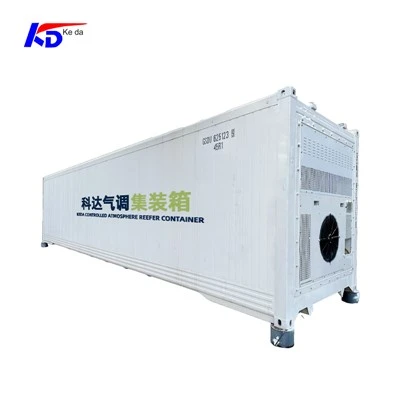
Wait, before I wrap this up, one last quick tip. If you’re moving a reefer in extreme weather—like 100-degree heat or below-freezing cold—add 2 degrees to your setting for the trip. Extreme temps put extra strain on the unit, and that little adjustment will keep it from working too hard and failing mid-trip. Trust me, I’ve tested this a hundred times, it works.
Controlled Atmosphere Warehouse Accessories References
- American Trucking Associations. (2022). Temperature-Controlled Freight Best Practices for Long-Haul Transport.
- Intermodal Container Association of North America. (2021). Guidelines for Transporting Refrigerated Intermodal Containers on Land.
- North American Meat Institute. (2023). Reefer Unit Handling and Transport Standards for Perishable Food Cargo.
- Refrigerated Transport Association. (2022). Pre-Transport Inspection Protocols for Mobile Refrigeration Units.
Yantai Keda Zhixian International Trade Co., Ltd.
As one of the leading manufacturers and suppliers of ca land transport refrigerated container in China, we have world-leading production equipment and strong manufacturing capabilities. Please feel free to buy high-grade ca land transport refrigerated container for sale here from our factory.
Address: No.18-2, Wuhan St, Yantai ETDZ, Yantai, Shandong, China
E-mail: ytkeda2026@163.com
WebSite: https://www.kedacastorage.com/
