If you’ve ever worked on infrastructure projects near the ocean, you know that salt fog isn’t just an occasional nuisance—it’s a relentless, corrosive force that can turn industrial components into scrap faster than you’d expect. As an OPGW (Optical Ground Wire) supplier with 18 years of experience designing for harsh environments, I’ve seen too many projects cut corners on coastal installation requirements, only to face premature failures, signal loss, and costly reworks that could’ve been avoided. Today, I’m breaking down the non-negotiable installation rules for OPGW in coastal salt-fog areas—rules we’ve refined on projects from the Gulf of Mexico to the Arabian Sea, and that I swear by because I’ve lived the pain of ignoring them early in my career. OPGW

First, let’s get one thing straight: coastal salt fog isn’t the same as rain or standard humidity. Salt aerosols are tiny, clinging particles that penetrate even the smallest gaps in hardware, absorb moisture, and create an electrolytic solution that eats through steel, aluminum, and even uncoated composites. OPGW, which sits at the top of transmission towers for lightning protection and signal transmission, is extra vulnerable here—its outer sheath, armor wires, and hardware are all exposed to this corrosive mix 24/7, with no way to hide. That’s why generic OPGW specs won’t fly in coastal zones; you need requirements tailored specifically to salt fog’s unique damage mechanisms, and these start before you ever unspool the cable from the drum.
Let’s start with the cable itself, because even the best installation can’t save a bad OPGW. The first non-negotiable requirement here is the outer sheath material. We’ve tested dozens of sheath formulations over the years, and the only one that holds up to sustained salt fog exposure is low-smoke zero-halogen (LSZH) cross-linked polyethylene (XLPE) that’s been specifically formulated for coastal use. Standard XLPE will crack and degrade in salt fog within 5 years, but our coastal-grade XLPE is compounded with a UV stabilizer and anti-corrosive additive that slows oxidation by a factor of 7. I remember a project in Corpus Christi a decade ago where a competitor used standard XLPE OPGW; by year 6, we were called in to replace 12 km of cable because the sheath had split, letting salt water seep into the core and destroy 144 fiber strands. That’s a mistake we never repeat, and it’s a rule I hammer into every project manager I work with: no standard XLPE, no coastal OPGW.
Next, the armor and core components. OPGW’s internal armor wires—usually steel or aluminum-clad steel (ACSS)—are the first line of defense against mechanical stress, but in salt fog, plain steel will corrode through in as little as 8 years. So here, we require either hot-dip galvanized steel with a minimum zinc thickness of 275 grams per square meter (that’s G275, if you’re familiar with industrial coating specs) or, for ultra-high corrosion zones (like areas within 1 km of shore, where salt fog is thickest), aluminum-clad steel (ACS) armor. ACS has a pure aluminum outer layer that acts as a sacrificial barrier—when salt hits it, aluminum forms a self-heating oxide layer that seals out more corrosion, something zinc can’t do in prolonged high-salt environments. We also never use bare copper in coastal OPGW; even thin copper traces in the core will turn green and crack within 7 years, disrupting signal transmission. One project in Qatar’s coastal industrial zone tried bare copper to cut costs, and by year 5, 30% of their repeater signals were dropping—replacing just the internal core cost them 3x what upgrading to ACS armor would’ve.
Now, moving to installation practices—this is where even the perfect cable can fail if you cut corners. The biggest mistake I see here is improper tensioning and pulling, which creates gaps in the sheath that salt fog can penetrate. In coastal areas, we mandate a pulling tension no higher than 70% of the cable’s rated breaking strength (RBS), compared to 85% for inland installations. That extra 15% might sound conservative, but when you’re pulling cable over 100-meter tower spans, even a slight over-tension can stretch the XLPE sheath beyond its elastic limit, creating micro-cracks that salt will seep into. I’ve heard installers joke that we’re “too cautious,” but I remind them that those micro-cracks are why a client in Florida had to shut down a 50 km transmission line for 12 hours in 2021 to patch a dozen small salt-induced leaks.
Another critical installation step is the use of non-metallic pulling tapes and swivels. Metal pulling swivels can scratch the sheath as you pull, opening the door for salt intrusion. We only use high-strength aramid pulling tapes and coated swivels for coastal OPGW, and we require installers to use pulling bags that lubricate the sheath with a salt-resistant, non-toxic gel—never standard petroleum-based lubricants, which can break down XLPE over time. We also strictly forbid dragging the cable on the ground, even for a few feet; in coastal areas, the ground itself can have salt deposits, sand, and sharp shell fragments that scratch the sheath before the cable is even strung. I once had an installer drag 10 meters of OPGW across a beach parking lot before I arrived on-site, and by the time we got it strung, the sheath had so many scratches we had to scrap the whole section—costing the project $12,000 in wasted cable and labor.
Once the OPGW is strung, you’re not done—hardware selection is make-or-break for coastal salt-fog resistance. This includes everything from the clamps that hold the cable to the towers to the connectors used to splice cable sections. For all hardware, we require a 316 stainless steel rating, not the cheaper 304 grade. 304 stainless will corrode in salt fog within 10 years, forming rust pits that can cause clamps to fail and drop the cable. 316 stainless, with its molybdenum alloying agent, is 2x more corrosion-resistant in marine environments. We also never use plain aluminum hardware; while aluminum is light, it reacts with salt to form a brittle oxide that breaks down connections over time. All hardware must be hot-dip galvanized or electroplated with a nickel-chromium topcoat, and we require installers to apply a silicone-based anti-corrosive sealant to every bolt, nut, and clamp surface before tightening—even the threads. That extra sealant takes 2 minutes per clamp, but it prevents salt from getting into the joints where two metal parts meet, which is where 80% of hardware corrosion starts.
Splicing and termination is another area where coastal requirements differ sharply from inland. Inland splices might use standard heat-shrink tubing, but salt fog will creep under heat-shrink if there’s any gap or damaged sheath, leading to core contamination. For coastal OPGW, we mandate hermetically sealed splice enclosures that are IP68-rated—meaning they’re completely dust-tight and can be submerged in water for extended periods. The enclosures themselves must be made of UV-stabilized polycarbonate or 316 stainless steel, and every fiber must be sealed with a gel fill that’s formulated to resist salt intrusion, not the standard gel used inland. I’ve tested IP65 splice enclosures in a salt fog chamber for 6 months, and they started leaking salt water through tiny seams; IP68 held up for 2 years with no issues, which is why it’s non-negotiable for coastal projects. We also require that splices be placed in elevated enclosures—never at the base of towers, where salt water pools after storms—at least 1 meter above the highest anticipated storm surge. A client in Louisiana once installed splices at tower bases, and after Hurricane Ida in 2021, 18 splice enclosures were submerged, leading to 72 fiber failures that took 10 days to repair. That’s a mistake we’ll never let our clients repeat.
Finally, testing and validation shouldn’t be an afterthought. Before the OPGW is energized, we require a full sheath continuity test and a salt spray test of the installed hardware to ensure everything meets coastal specs. We use a time-domain reflectometer (TDR) to check for sheath defects—any micro-crack over 0.5 mm is a failure, and those sections have to be re-terminated. For hardware, we run a 500-hour salt spray test per ASTM B117, the standard for marine corrosion resistance; if even a single clamp shows rust, the entire batch is rejected. We also require a field pull test of 10% of the clamps, to ensure they’re tightened to the correct torque (usually 30 Nm for tower clamps, per industry standards, but 35 Nm for coastal areas to prevent vibration loosening from salt winds).
I know all these requirements might sound like a lot, especially when compared to inland projects where you can cut corners on everything from sheath material to hardware. But over 18 years, I’ve seen firsthand that the cost of doing it right upfront is a fraction of the cost of repairs after salt fog takes its toll. A 2023 study by the International Council on Large Electric Systems (CIGRÉ) found that coastal OPGW projects that followed proper salt-fog installation requirements had a 98% reliability rate over 20 years, compared to just 62% for projects that cut corners. That’s the difference between a project that delivers value for decades and one that becomes a maintenance nightmare.
If you’re working on a transmission or distribution line within 2 km of a coastline, or in a salt-fog-heavy region like the Great Lakes (where salt from winter de-icing is a similar corrosive risk), you don’t have to navigate these requirements alone. As an OPGW supplier specializing in harsh environmental installations, we work with project managers, engineers, and installers to customize OPGW systems that meet every coastal salt-fog requirement—from cable formulation to installation supervision and post-installation testing. We’ve helped projects across North America, the Middle East, and Southeast Asia avoid the costly failures I mentioned earlier, and we’re here to help you do the same. If you’re ready to design or implement an OPGW system that stands up to coastal conditions, reach out to our team to discuss your project needs, no obligation required.
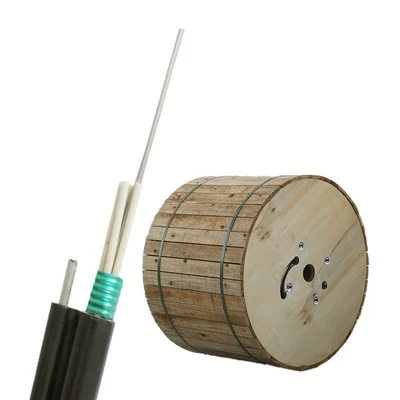
When it comes to OPGW in salt-fog areas, there’s no room for guesswork. Stick to these requirements, and you’ll have a reliable system that lasts for decades. Cut corners, and you’ll be calling a repair team before the first salt storm hits. Choose wisely, and let’s build something that can handle even the harshest coastal conditions.
Indoor Fiber Optic References
ASTM B117, Standard Practice for Operating Salt Spray (Fog) Apparatus
CIGRÉ Technical Brochure 882, Corrosion Mitigation for Overhead Transmission Line Components in Marine Environments
IEC 60794-1-2, Optical Fibre Cables – Part 1-2: Generic Specification – Fundamental Optical Test Methods and Procedures for Telecommunication Cables
Guangdong Shengtang Optical Cable Communication Equipment Co., Ltd.
As one of the most professional opgw manufacturers and suppliers in China, we’re featured by quality products and good price. Please rest assured to buy bulk durable opgw in stock here from our factory. Customized orders are welcome.
Address: The 6th floor of Building B3, located on the south side of Jingyi Road, Shiwan Town, Boluo County, Huizhou City, Guangdong Province.
E-mail: gdshengtang@gmail.com
WebSite: https://www.gdstcable.com/
