If you’ve ever looked into industrial water electrolysis equipment, especially hydrogen-oxygen generators, you might have asked a question that trips up even new facility managers and maintenance technicians: What kind of power supply does this machine actually run on? As a supplier who’s spent the last 12 years troubleshooting, modifying, and delivering these units to shops, labs, and manufacturing facilities across North America, I can tell you this isn’t a one-size-fits-all answer— and getting it wrong is one of the most common headaches I see customers bring to our service desk. Hydrogen-oxygen Generator
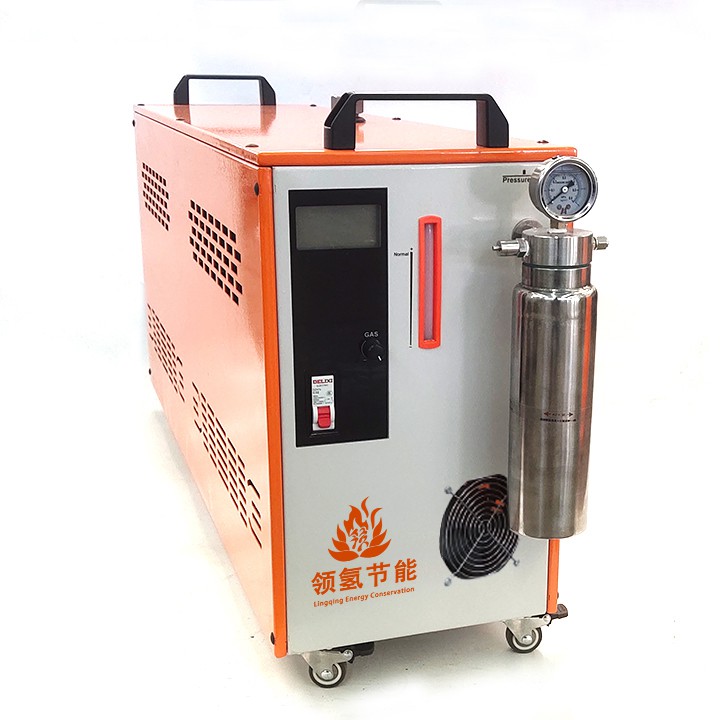
Let’s start with the basics to ground this. A hydrogen-oxygen generator works by splitting pure H2O into its component gases, a reaction called electrolysis. Think of it like reversing a fuel cell: instead of combining hydrogen and oxygen to make electricity, you’re using electricity to pull those gases apart. That core reaction is what dictates the power supply, but there are other factors—size of the generator, intended use, even regional electrical codes—that shape what we ship to a customer.
First, the most common power supply type for small to mid-sized hydrogen-oxygen generators is direct current (DC) power. Wait, I can already hear some of you saying, “Most industrial equipment runs on alternating current (AC) — why not this?” The answer boils down to efficiency. AC is great for long-distance power transmission because it’s easy to step up and step down voltage, but electrolysis cells rely on a steady, unchanging flow of electricity through the electrolyte solution (usually a mix of deionized water and a mild potassium hydroxide or sodium hydroxide, depending on the unit). If you flip the direction of current (which AC does 50 or 60 times per second, depending on your region), that causes unwanted side reactions in the electrolyte. Those side reactions eat away at the electrode plates over time, reduce gas purity, and even waste energy as heat.
For the generators we sell for small tasks: like jewelry soldering, laboratory glass blowing, or small metal heat treating, our standard model runs on 12V or 24V DC power. Wait, I know that seems low, but let’s put that in perspective. A 12V DC power supply is easy to source as an off-the-shelf unit, but we don’t just grab a random adapter off Amazon—we custom-spec DC supplies with what we call “low ripple.” Ripple is the tiny fluctuation in voltage that happens even with well-made DC supplies, and too much ripple brings that same AC problem we talked about. For those small units, the power supply is a built-in component, wired directly to the electrolysis stack, and designed to be safe for use in closed, workshop spaces with standard 120V AC wall power as input. The generator’s internal circuitry converts that incoming AC to clean, low-ripple DC, so the user just plugs it into a regular wall outlet and it’s ready to go. That’s why a lot of our smaller, hobbyist or light industrial generators feel familiar to anyone who’s used a power tool or laptop charger—you just plug them in, no fancy wiring needed.
Now, scale up to mid-sized generators, the kind used for things like medium-scale metal cutting, food processing equipment cleaning, or small-scale metal 3D printing, and the power supply changes. These units still use DC for electrolysis, but they need much higher voltage and current to produce the 50 to 500 liters of hydrogen-oxygen gas per hour that their users need. Our mid-range generators use what’s called a switched-mode power supply (SMPS) as their DC source. SMPS units are different from old linear power supplies—they’re smaller, more efficient, and can adjust their output based on how much gas the user needs. That’s a big deal: if a user only needs 100 liters of gas that day, the SMPS cuts the current, saving power instead of wasting it.
We also spec these SMPS units to work with the regional AC input that our customers have. Most of our North American mid-sized generators run on 240V AC, which is standard for tools like air compressors or welders, but we also offer models for international markets that run on 220V 50Hz or 380V 50Hz. The key here is that the power supply isn’t just a converter—it’s integrated with the generator’s control system. The SMPS communicates with the unit’s sensors, which track electrolyte level, gas purity, and stack temperature, to adjust voltage automatically. If the stack gets too hot (a common issue if a user runs the generator nonstop for 12 hours straight), the SMPS lowers current temporarily to prevent damage. That’s a feature we added after a customer in Phoenix burned out three SMPS units in a month because they didn’t know their unit needed a cool-down period—we now program the control system to alert users and cut power if temperatures get too high.
But what about large-scale hydrogen-oxygen generators, the ones used for industrial applications like steel mill cutting, waste gas treatment, or large-scale heat treatment for aerospace parts? These are the units that produce thousands of liters of gas per hour, and their power supply is a different beast entirely. For these, we don’t use standard off-the-shelf SMPS or linear power supplies. Instead, we deliver custom, high-current DC power supplies that are designed to handle continuous operation at high voltage—usually between 48V and 80V, with current ratings up to 100 amps or more. These power supplies are often modular too: if a customer needs to expand their gas production later, they can add modules to the power supply without replacing the whole unit, which saves a lot of money compared to buying a new generator.
I want to be clear here: even for these large industrial units, the power supply is still DC. We tried using AC power supplies for a large steel customer a few years back, and the result was a disaster. Their unit’s electrode plates corroded in three weeks, instead of the expected two years, and the gas purity dropped from 99.9% to 95%, which made their cutting process inconsistent. That’s when we doubled down on DC for electrolysis, even for large units. The only time we’ve deviated is for a very specific, niche application: high-pressure hydrogen-oxygen generators used for rocket testing. Those units use specialized high-voltage DC power supplies, but that’s a whole different market, and we don’t serve that segment. Our focus is on practical, industrial generators that work for everyday applications, not lab-scale aerospace testing.
Now, I should mention a common misconception we hear a lot: some customers think that because hydrogen-oxygen is a gas, the power supply needs to be explosion-proof. That’s not entirely wrong, but it’s not about the power supply itself—it’s about how the unit is sealed. All the generators we sell, regardless of power supply type, are rated for use in environments with flammable gases, because we seal the electrolysis stack and gas lines tightly to prevent leaks. The power supply, though, is usually in a separate, vented enclosure to keep it cool and away from any potential gas buildup. For customers in regions with strict explosion regulations, like parts of the Gulf Coast, we can upgrade the power supply enclosure to be intrinsically safe, which means it can’t produce a spark hot enough to ignite hydrogen even if there’s a leak. That’s an add-on we offer, and it’s become more popular in the last five years as more refineries and chemical plants add hydrogen-oxygen gas systems for cleaning and maintenance.
Another thing we’ve learned over the years: matching the power supply to the generator’s intended use is way more important than just picking a high-voltage unit. For example, a customer recently came to us with a 1,000-liter-per-hour generator that they wanted to use for jewelry soldering. They tried to run it on a 24V DC power supply meant for industrial use, but it was way too much power—so much that it burned through their gold solder joints too fast, and the electrode plates were wearing out in less than six months. We swapped their power supply to a smaller, lower-ripple 12V DC unit, and suddenly their solder quality improved, and the plates lasted twice as long. That’s why we spend 30 to 45 minutes on every customer’s first call asking about their intended use: not just how much gas they need, but what they’ll be using the gas for, what their electrical setup is like, and even how often they’ll run the generator. That lets us spec exactly the right power supply, instead of forcing a one-size-fits-all unit that doesn’t work for their needs.
I also want to talk about a trend we’ve seen in the last decade: the move toward renewable energy-powered hydrogen-oxygen generators. More and more customers are asking if their generators can run on solar or wind power, which are both DC power sources. That’s actually a perfect match, because our generators use DC power supplies already. For off-grid customers, like a remote mining operation or a small farm that needs to heat treat metal parts, we can integrate the generator’s power supply with solar panels and battery storage. We’ve even had a customer in northern Canada set up a system where their hydrogen-oxygen generator runs on solar power in the summer and stored battery power in the winter, eliminating the need for a diesel generator that was expensive to transport and maintain. That’s a huge win for customers who want to reduce their carbon footprint or operate in remote areas with limited grid access.
Now, let’s address a question that always comes up when we talk about power supplies: is there any downside to using DC power for these generators? The main one is cost. DC power supplies, especially high-quality, low-ripple units, are more expensive than equivalent AC supplies. But when you add up the cost of reduced electrode replacement, lower energy waste, and longer generator lifespan, it ends up being cheaper in the long run. We’ve calculated that for a mid-sized generator running 8 hours a day, 5 days a week, the energy savings from using DC instead of AC add up to around $1,200 a year—enough to cover the difference in the power supply cost within two years. That’s why we’ve never recommended AC power for electrolysis, no matter how cheap it seems upfront.
Over the years, we’ve tested a lot of different power supply types, and I can tell you this: the ones that work best for our customers are the ones that are tailored to their specific use case. A small hobbyist’s soldering rig doesn’t need a 100-amp industrial DC supply, and a steel mill cutting line doesn’t need a low-voltage 12V adapter. The power supply is the backbone of the generator—if it’s not the right type, nothing else works right.
If you’re in the market for a hydrogen-oxygen generator, don’t just look at gas production numbers. Ask about the power supply: is it DC? What’s the ripple rating? Is it integrated with the control system? Does it work with your existing electrical setup? Those are the questions that will determine how well your generator works, how long it lasts, and how much it costs to run.

We’ve been supplying hydrogen-oxygen generators for over a decade, and we’ve worked with customers across every industry—from small jewelry shops to large aerospace manufacturers. We don’t just sell a machine; we help you pick the right power supply, install it correctly, and maintain it for years to come. If you’re ready to discuss your needs and find a hydrogen-oxygen generator that fits your operation, don’t hesitate to reach out.
Oxygen Welding Machine References
- Office of Energy Efficiency & Renewable Energy. (2022). Electrolysis Technologies for Hydrogen Production. U.S. Department of Energy.
- International Electrotechnical Commission. (2021). Safety Requirements for Industrial Electrolysis Systems. IEC 61508.
- Hydrogen and Fuel Cells Program. (2020). Low-Ripple DC Power Supplies for Portable Hydrogen Generators. National Renewable Energy Laboratory.
- Industrial Gas Users Association. (2019). Best Practices for Hydrogen-oxygen Generator Operation and Maintenance. IGUA Technical Report No. 17.
Jiangsu Lingqing Energy-saving Technology Co., Ltd.
We are one of the most reliable hydrogen-oxygen generator manufacturers and suppliers in China. With abundant experience, we warmly welcome you to buy customized hydrogen-oxygen generator made in China here from our factory. If you have any enquiry about quotation, please feel free to email us.
Address: Building #7, No. 1 Linhe Road, located on the west side of Anlan Road and north of Linhe Road, Huaiyin District, Huaian City, Jiangsu Province.
E-mail: jslingqing@163.com
WebSite: https://www.lingqingtech.com/
