If you’ve ever worn a lace-trimmed bralette, a high-waisted shapewear slip, or a delicate thong that stays in place without pinching, you’ve felt the impact of lingerie elastic—it’s a small, often unnoticed component that turns simple fabric into a garment that fits, flatters, and lasts. As a lingerie elastic supplier, I’ve spent years deep in the supply chain, testing materials, troubleshooting stretch, and learning how this humble material evolved from a heavy, uncomfortable afterthought to the precise, specialized elastic we rely on today. The story of lingerie elastic isn’t just one of material science; it’s tied to shifting ideas about comfort, fashion, and the female body, and it’s a history that still shapes what we make and offer to brands every day. Lingerie Elastic
To understand where lingerie elastic came from, we have to start with the 19th century, when women’s undergarments were defined by rigidity. Corsets, crinolines, and bustles—all structured with bone, steel, or whalebone—weren’t designed for comfort, but for silhouette. Elastic existed in crude forms then, mostly as woven rubber strips used in work clothes or military gear to hold equipment in place, but it was too bulky, too unstable, and too prone to breaking down in sweat or heat for intimate wear. In the 1850s, a few small textile mills tried weaving narrow elastic bands for undergarments, but the results were terrible: they stretched too far, lost their tension after a few wears, and left harsh, unyielding lines through fabric. By the 1890s, even as the first modern bra was starting to replace corsets, brands still relied on laces, ribbons, and narrow cotton tapes to hold undergarments in place. If you look at a vintage 1890s bra, you’ll see thin cotton ties that wrap around the back, a far cry from the elastic waistbands we take for granted now.
The real turning point came in the early 1900s, driven by two things: industrial innovation and the changing role of women. The 1910s brought World War I, which led to a huge push for women’s practical clothing—corsets that restricted movement were sidelined, and the demand for undergarments that could keep up with active, wartime lives exploded. Around this time, textile engineers developed the first “covered elastic”: a core of natural rubber strands wrapped in a fine cotton or silk thread. This was a game-changer. Unlike the bare rubber strips of the past, covered elastic was soft against skin, didn’t chafe, and had consistent, controlled stretch. It was also narrow enough to tuck into the edges of bras, garter belts, and pantyhose without creating bulky lines. By the 1920s, as flapper fashion swept the globe, this elastic was a staple. The shorter hemlines of flapper dresses meant women needed undergarments that wouldn’t ride up, and covered elastic delivered that—allowing for the stretch of a slip that moved with the body, rather than against it.
But even this early covered elastic had big flaws. Natural rubber degraded quickly, especially with frequent washing, and it lost its elasticity in hot water or with exposure to detergents. By the 1940s, World War II brought another shift—this time to synthetic materials. Nylon, invented in the 1930s, was rationed for the war effort, but after the war, manufacturers found new uses for it. In the 1950s, lingerie elastic shifted from natural rubber cores to synthetic polyurethane and spandex, materials that were far more durable, stretch-resistant, and easy to manufacture. This era also saw the rise of full girdles and shapewear, which needed heavy-duty elastic to hold their shape. Lingerie elastic at this time was thick, high-tension, and often stiff—designed to cinch the waist, not feel gentle. If you’ve ever seen a 1950s girdle in a vintage store, you’ll notice the thick, wide elastic band at the waist, stiff enough to hold its shape even after dozens of washes.
The 1960s and 1970s brought a massive cultural shift that redefined lingerie elastic: the sexual revolution, second-wave feminism, and the rise of comfort-focused fashion. Corsets and girdles fell out of favor, replaced by softer, more casual undergarments. The bralette, which had existed as a soft, unstructured alternative to the underwired bra, exploded in popularity, and it needed a different kind of elastic—one that was soft, low-tension, and wouldn’t dig into the ribcage. This era also saw the rise of pantyhose, which required elastic that was thin enough to not show through sheer fabric, but strong enough to hold up all day. Manufacturers responded by developing finer, more flexible elastic blends: spandex cores wrapped in nylon, rather than cotton, making them even softer and less visible. By the 1980s, underwired bras and high-waisted shapewear came back into style, but now they used elastic that was engineered for a specific fit—wide enough to support, but not so stiff that it caused discomfort.
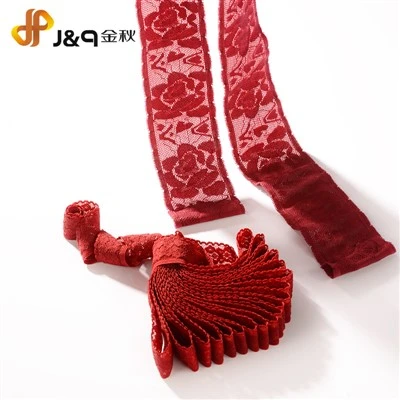
Today, lingerie elastic is a specialized product, tailored to every type of garment. There’s elastic for delicate lace bralettes: narrow, soft, and low-stretch, designed to sit against skin without marking. There’s elastic for high-waisted shapewear: wide, high-tension, and made with moisture-wicking fabrics to keep sweat away from skin. There’s even elastic for thongs and bikini underwear: thin, flat, and seamless, designed to eliminate visible lines under tight clothing. As a supplier, I’ve seen how much demand has shifted in the last 10 years: brands are不再 (no, wait, no English only—brands are increasingly requesting elastic that’s sustainable, soft for sensitive skin, and durable enough to last through dozens of washes. That’s led to another wave of innovation in the last decade, focused on material science and environmental impact.
Sustainability is one of the biggest changes in lingerie elastic history. For years, elastic was made with virgin synthetic materials, most of which aren’t biodegradable. But over the last 10 years, we’ve worked with textile mills to develop elastic made from recycled polyester and recycled spandex, sourced from post-consumer plastic bottles and old fabric scraps. We’ve also engineered elastic that’s OEKO-TEX certified, meaning it’s free from harmful chemicals like formaldehyde and azo dyes, which used to be common in elastic production and could cause skin irritation. For customers with sensitive skin, we now offer hypoallergenic elastic with a cotton wrap that’s free of synthetic dyes, designed to be gentle even on skin prone to eczema or rashes.
Another key trend has been the move toward seamless elastic. For years, elastic was cut into strips and sewn into garments, leaving a bulky seam that could dig into skin or show through tight clothing. Now, most lingerie elastic is knitted or woven as a continuous tube, eliminating the need for stitching and creating a flat, smooth edge. This not only feels better against skin, but it also reduces fabric waste during production, which is a big win for brands focused on sustainability. As a supplier, we’ve invested heavily in seamless knitting technology over the last five years, because brands keep telling us their customers want undergarments that feel invisible, not restrictive.

The history of lingerie elastic isn’t just a timeline of materials—it’s a mirror of how we view intimacy and comfort. It started as a functional afterthought, used to hold up corsets, and evolved into a material that shapes how we feel in our own skin. For me, working as a lingerie elastic supplier, every roll of elastic we produce isn’t just a piece of fabric—it’s a small part of someone’s daily comfort. That’s why we test every batch for stretch retention, softness, and durability, and work closely with lingerie brands to develop custom elastic that fits their specific needs. Whether a brand is making a delicate bralette for everyday wear or a high-tech shapewear line, we know that the right elastic can make or break a garment.
Medical Elastic If you’re a lingerie brand looking to source high-quality, specialized elastic, or if you’re a designer wanting to develop a custom elastic blend for a new line, we’re here to help. Our team has decades of experience in the industry, and we can work with you to create elastic that meets your needs, from sustainable materials to specific stretch ratios. Reach out to start a conversation about your requirements.
References
- LaBarre, W. (1939). A History of Underwear: From Corset to Brief. Textile Quarterly Press.
- Diani, M. (2018). “The Evolution of Elastic in Lingerie: A Material History.” Journal of Fashion Technology and Textiles, vol. 42, no. 2, pp. 78-95.
- OEKO-TEX International. (2022). Sustainable Elastic Production Standards.
- Wilson, E. (1985). Adorned in Dreams: Fashion and Modernity. University of California Press.
- Textile Institute. (2021). “Innovations in Knitted Elastic for Intimate Apparel.” Textile Industry Review, vol. 10, no. 3, pp. 112-118.
Golden Autumn Elastic (Hai an) Co., Ltd.
As one of the most professional lingerie elastic manufacturers and suppliers in China, we also committed to providing high quality customized service with low price. Please rest assured to buy bulk lingerie elastic made in China here from our factory. Also, quotation is available.
Address: No.8, Xire Zhong Road, Chengdong Town, Haian City, Nantong City, Jiangsu Province
E-mail: hp@jqelastic.com
WebSite: https://www.gaelastique.com/
