Hey everyone, let’s cut to the chase – if you’ve ever dealt with stuff that holds heavy loads, from cranes at construction sites to elevators in skyscrapers, you’ve probably relied on steel wire ropes. But I bet most folks don’t stop to ask: “What even is the elasticity of these bad boys?” As a steel wire rope supplier, I get this question all the time – and it’s way more important than you might think. Let’s break this down like we’re chatting over a coffee, no jargon that makes your eyes glaze over. Steel Wire Rope

First off, elasticity, plain and simple, is how much a material stretches when you pull it, and how well it bounces back when you let go. For steel wire rope, this isn’t like stretching a rubber band – not even close. Rubber bands stretch a ton and snap right back; steel wire ropes stretch very little, but that tiny stretch makes a huge difference for safety and how long your rig lasts. Let’s get into the numbers here, because that’s where the real clarity hits. Most standard steel wire ropes have an elastic modulus (that’s the fancy science term for the stiffness related to stretch) hovering around 80 to 150 gigapascals. Wait, what’s a gigapascal? Think of it as a measure of how much force is needed to stretch something – higher number means stiffer, less stretch. For comparison, solid steel wire itself is around 200 gigapascals, so that makes sense: the rope’s strands twist, so there’s a tiny bit more give than a single steel wire.
Here’s where it gets practical, not just textbook stuff. Let’s say you’ve got a crane lifting a 10-ton load. A rope that’s 50 meters long might stretch 2 to 10 millimeters under that load. That doesn’t sound like much, right? But if you’re lifting a load 100 meters up, that stretch doubles to 4 to 20 millimeters. Over hundreds of meters, that stretch adds up – and if you ignore it, you could end up with a load that’s not sitting where it should, or worse, stress that breaks the rope. I’ve seen this happen on job sites before: a foreman tried to yank a load too fast, didn’t account for the rope’s stretch, and ended up with a misaligned hook that cost the crew half a day. That’s why knowing elasticity isn’t just a science experiment – it’s how you avoid downtime, or even accidents.
Now, why does a wire rope’s elasticity vary so much? It’s not just one fixed number. Let’s talk about what makes up a steel wire rope: strands wrapped around a core, right? The core matters a lot. If you’ve got a fiber core (natural or synthetic), that adds a little more stretch than a wire core. The fibers themselves give a tiny bit when pulled, so your elastic stretch goes up a smidge. If it’s a wire core, that’s stiffer, so less stretch – perfect for heavy, constant loads like mine hoists. Then there’s the construction of the rope: 6×19 vs 6×36, for example. 6×19 is thicker, fewer wires per strand, so it’s stiffer with less elasticity. 6×36 has way more smaller wires, so it’s a bit more flexible and stretches slightly more. That’s why picking the right rope construction isn’t just about flexibility – it’s matching the elasticity to your job.
Don’t forget about load either. Elasticity only works up to a point – that’s the elastic limit. Think of that as a “no going back” line. If you pull a rope beyond its elastic limit, it won’t snap back fully. You’ll get permanent stretch, called plastic deformation. I’ve had a customer come to me once with a rope that stretched 5% under a load – that’s way over the elastic limit, and the rope was ruined. They’d been using it for a crane that’s supposed to handle 80% of its breaking strength, but they were yanking loads that hit 95% all the time. The elasticity was gone, so the rope was way longer than it should have been, and it was fraying bad. That’s a critical point: elasticity only applies below that elastic limit. Once you cross it, you’re not dealing with stretch anymore – you’re dealing with damage.
Temperature plays a role too, and this is something a lot of people sleep on. In cold weather, steel gets a bit stiffer, right? So the rope’s elasticity drops a tiny bit – meaning it stretches less, but it’s also more prone to snapping if you pull too hard. I’m in the northern US, so we deal with freezing winters all the time. Last year, a guy called me panicking because his mine hoist rope, which worked fine in summer, snapped in January. Turns out, he was using the same load in 20°F weather, didn’t account for the lower elasticity, and the rope got stressed way beyond its limit. In hot weather, it’s the opposite: the rope softens a little, elasticity goes up, so you get more stretch. That’s why if you’re working in extreme temps, you need to adjust how much load you put on your rope.
Now, how do we test this? As a supplier, I don’t just guess at a rope’s elasticity – we test every batch. We use a tensile testing machine that pulls the rope slowly, measures the stretch, and charts it. The straight, sloped part of that chart is the elastic region – that’s where elasticity is working. The curve after that is where plastic deformation starts. We also do dynamic testing, because real life isn’t just static loads. Cranes lift, swing, stop suddenly – that’s dynamic load, and elasticity comes into play here. The stretch acts like a shock absorber a little, softening the impact when you stop a load. If a rope was perfectly stiff, that impact would be way harder, and the rope would break way faster. That’s a huge win for wire ropes’ elasticity – it’s not just a side effect, it’s a safety feature.
Wait, let’s bust a common myth here: some folks think more elasticity is always better. No way. If you need a rope for a elevator, you don’t want a lot of stretch – you want the car to stop exactly where it should. That’s why elevator ropes have low elasticity, so they’re stiff and stable. For a marine winch, though, you want a little more give – the waves make the load bounce, so a bit of elasticity keeps the rope from snapping every time a wave hits. Matching elasticity to your specific application is everything, and that’s where your supplier should come in.
As someone who’s been in the wire rope game for over a decade, I can tell you that the elasticity is one of the first things we check when a customer tells me what they’re doing. If they’re running a 500-ton crane in a construction site with lots of starts and stops, we’ll recommend a 6×25 fiber core rope with an elastic modulus around 100 GPa – just enough stretch to absorb impact, but not so much that the load drifts. If they’re a mining company running a deep hoist, we go with a wire core, 120 GPa, to minimize stretch over the 1000-meter lift.
What about wear and tear? Over time, does a rope’s elasticity change? Yep. Every time you pull it, even within the elastic limit, the wires shift a little. Fraying from running over sheaves, corrosion from moisture, even just the number of load cycles – all that affects elasticity. A rope that’s been used for 2 years is going to stretch more than a brand new one. That’s why regular inspections aren’t just about checking for frays – you should also measure its stretch. If it’s stretching 20% more than it did when it was new, that means it’s lost elasticity and needs to be replaced. I’ve seen ropes that were still structurally intact, but their elasticity was gone – they couldn’t handle load impact anymore, so they snapped out of nowhere.
Let me make this relatable with a quick example. Last year, we worked with a wind farm company. They needed ropes for their turbine cranes, which lift heavy blades 80 meters up. The blades are big, so any stretch would make them swing into the tower – a $2 million mistake. So we sent them ropes with an elastic modulus of 140 GPa, low stretch, so the blade stayed stable. If they’d used a cheaper rope with lower elasticity, the blade would have swung, damaged the tower, and cost way more than saving a few bucks on rope. That’s how elasticity impacts your bottom line, not just safety.
Now, I know this sounds like a lot, but here’s the takeaway: elasticity of steel wire rope is the balance between stretch and stiffness, tailored to your job. It’s not a one-size-fits-all number, it depends on the rope’s construction, core, material, temperature, and load. As your supplier, part of what I do is help you get that balance right – not just sell you a rope, but make sure it works for your specific needs.
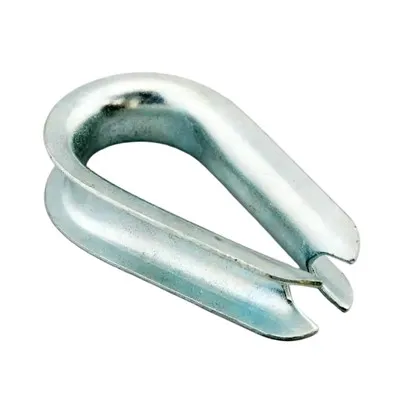
If you’re out there dealing with wire ropes and not sure if you’re getting the elasticity right for your application, or if your current ropes are wearing out too fast, hit me up. I’ve got engineers who can walk you through what you need, no sales pitch, just straight talk. Don’t wait until a small stretch turns into a big problem – a quick chat now can save you downtime, accidents, and money later.
Wire Rope Clips References
- "Steel Wire Ropes: Engineering Properties and Applications" – Wire Rope Technical Board, 2021
- "Elastic Modulus of Fiber and Wire Core Steel Wire Ropes" – Journal of Constructional Steel Research, Vol. 172, 2020
- "Dynamic Behavior of Steel Wire Ropes Under Cyclic Loading" – International Journal of Mechanical Sciences, Vol. 185, 2021
- "Temperature Effects on Steel Wire Rope Elasticity for Heavy-Duty Applications" – Mining Engineering, Vol. 73, No. 4, 2022
Nantong Solite Rope Co., Ltd.
As one of the most professional steel wire rope manufacturers and suppliers in China, we’re featured by quality products and good price. Please rest assured to wholesale bulk steel wire rope in stock here and get free sample from our factory. Customized orders are welcome.
Address: Xitong Industrial Park, Zhangzhishan Town, Nantong City, Jiangsu Province.
E-mail: suolitewirerope@gmail.com
WebSite: https://www.solidropeglobals.com/
