What even is a gasket? I get asked that all the time by folks just starting out with industrial parts, or even small business owners who accidentally ended up needing one for their equipment and have no clue where to look. Let me break this down like I would over a coffee with a buddy, no stuffy textbook jargon—though I’ll get into the real science, too, since that’s why gaskets actually matter, not just some random rubber ring. Gasket
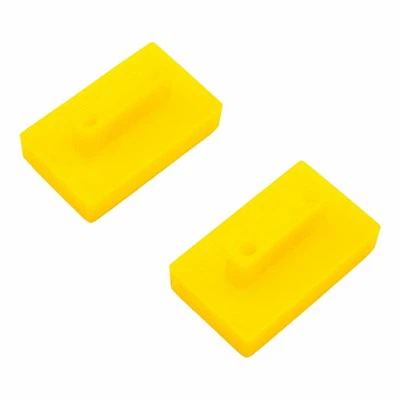
First off, forget the old “it’s just a rubber seal” myth. Yeah, a lot of gaskets are rubber, but that’s just one type. At its core? A gasket is a thin, static seal (meaning it doesn’t move while it does its job) that fills in the tiny gaps between two mating surfaces. Wait, let’s paint a picture: think of two metal flanges bolted together for a pipe carrying water, oil, or even high-pressure gas. No surface is perfectly smooth, right? Run your finger over a smooth metal plate under a microscope (we do this sometimes in our shop to show new hires) and you’ll see tiny peaks and valleys, scratches, little dents from machining. If you just bolt those two plates together without anything between ’em, all those gaps turn into leaks. Water seeps out, pressure drops, or worse—something dangerous gets in, like dirt or chemicals that mess up whatever that pipe’s carrying. That’s where the gasket comes in. It squishes into those valleys when you tighten the bolts, blocking every little path that would let fluid or gas escape.
Now, why does that squish matter so much? It’s not just to make a tight seal. Gaskets also compensate for different materials expanding and contracting. Wait, take a car engine, for example. The head gasket sits between the engine block and the cylinder head. Both are metal, but when the engine runs, they heat up to thousands of degrees. Metal expands when hot, contracts when cold. If the two surfaces expand at slightly different rates (which they do, even if both are aluminum or cast iron), the gap between ’em changes. A good gasket flexes with that movement, so it never loses its seal. Bad things happen if a head gasket fails—oil mixes with coolant, overheating, engine dies. That’s a super common issue, and 9 times out of 10, it’s because someone didn’t get the right gasket for their specific engine, not because the part itself is junk.
Let’s talk about the different types, since this is where most people get confused. I don’t just stock one rubber gasket here—we carry 10+ types, each for a specific job. Rubber ones, like nitrile or EPDM: nitrile works great for oil and fuel, EPDM is for outdoor stuff, seals in weather-resistant doors, window gaskets, that kind of thing. Then there’s non-asbestos sheet (NAS) gaskets—those are super common for industrial pipes, they’re tough, handle high heat and pressure, way more durable than regular rubber. For really high-stuff situations, like refineries or chemical plants, we have metal gaskets—ring joint gaskets, spiral wound gaskets, even solid metal ones. Metal gaskets are for when you’re dealing with 1000+ PSI, or corrosive chemicals that would eat through rubber. Oh, and don’t forget paper gaskets—old-school, cheap, perfect for low-pressure stuff like lawn mower engines or small vacuum pumps. I’ve had a guy come in last month with a broken paper gasket for his push mower, needed it like, 10 minutes ago to fix his mower for the weekend. That’s the stuff we’re here for.
Wait, a common question: can’t I just use silicone instead? Silicone is a sealant, right, it’s goopy, you apply it, it dries. But silicone’s not a gasket. Gaskets are pre-cut, shaped exactly to fit your surface. If you use silicone, you have to spread it evenly, clean up the mess, wait for it to cure, and even then it’s temporary. A gasket’s built from material made to last, cut to your exact flange size, so you just drop it between the two parts, bolt ’em up, done. No mess, no waiting. That’s why gaskets are the go-to for permanent or long-term seals.
Let’s get into the science a little more, just so you know it’s not just a guess when we suggest a gasket. The main thing is “compression set” and “recovery.” Compression set is what happens when a material gets squished too much—if you leave a rubber ball squeezed for months, it stays flat, that’s compression set. A good gasket material has low compression set, so it doesn’t get permanently squished, it bounces back just enough to fill gaps even after years of use. Recovery is how well it bounces back—if a gasket compresses when you bolt it, then expands a little when the materials heat up, it needs to recover that thickness to keep the seal tight. That’s why cheap, no-name gaskets from the big box store often fail—they’re made of thin, low-quality rubber that compresses too much and never bounces back. We test every gasket we stock in our shop: we compress ’em, heat ’em up, cool ’em down, check if they still hold pressure. No junk makes it to our shelves.
I also get people asking: do I need a custom gasket, or can I get a standard one? It depends. Standard gaskets work for most off-the-shelf pipes, car parts, small engines. But if you’ve got a unique setup—like a custom industrial machine you built in your garage, or a old tractor that’s been modified—you need a custom cut gasket. That’s where we come in. We’ve got a CNC cutter in the back, can cut any shape, any size, from any material we stock, in like 15 minutes. Last week, a small business owner brought in a weird flange for a food processing machine that no one makes gaskets for, needed it that day to keep his line running. We cut one right there, he paid cash, was out in 20 minutes. That’s the kind of service people don’t get from the big online part sites.
Wait, let’s clear up a myth about gasket materials. A lot of people think “thicker is better” or “harder is stronger.” Nope, not even close. If you use a gasket that’s too thick, you have to tighten the bolts way more, which can warp the mating surfaces. If it’s too hard, it won’t squish into the tiny gaps, so leaks happen. It’s all about matching the gasket material, thickness, and type to your specific application. That’s why we ask customers a million questions when they reach out: what’s the fluid or gas going through this? What’s the temperature? What’s the pressure? What’s the material of the two surfaces you’re sealing? No two setups are the same, so no one size fits all.
I’ve seen first-hand what happens when you get the wrong gasket. A couple months back, a local auto repair shop brought in a truck with a failing head gasket. The mechanic had used a cheap paper gasket from a discount auto parts store, thought it’d work. The truck was for a construction company, runs 10 hours a day, hauling heavy loads. The paper gasket couldn’t handle the heat and constant expansion, blew out after a week. They had to pull the engine, replace the gasket, ended up costing way more than if they’d just come to us for a high-quality NAS head gasket. That’s why I always tell people: skimp on the gasket, and you’ll pay twice to fix it later.
Now, let’s talk about where gaskets are used, beyond just pipes and engines. They’re literally everywhere. Your phone has tiny gaskets inside that keep water out, so if you spill a drink on it, it doesn’t fry. Your dishwasher has gaskets around the door, so water doesn’t spray all over your kitchen. The HVAC system in your house uses gaskets in the ducts to keep air from leaking out, so your AC doesn’t work as hard. Even the water meter outside your house has a gasket to keep dirt and moisture out. You don’t see ’em, but they’re the quiet heroes that keep all your stuff working.
A lot of small business owners don’t realize that gaskets are a maintenance item, not a “set it and forget it” part. They wear out over time, especially if they’re exposed to harsh chemicals, extreme temperatures, or vibration. A vibrating industrial machine’s gaskets will wear out faster than a stationary pipe. That’s why it’s a good idea to keep a few spare gaskets on hand for your most common equipment—nothing worse than a machine going down because you don’t have a $5 gasket sitting on your shelf.

At the end of the day, a gasket’s job is simple: keep what’s supposed to in, in, and what’s supposed to out, out. But as we’ve talked about, the details matter. The wrong gasket, or a bad one, turns that simple job into a headache. That’s where we come in. We’re not just a supplier of gaskets—we’re people who’ve been in the industry for years, know what works, what doesn’t, and can help you pick the right one for whatever project you’re working on. Whether you need a custom cut gasket for a one-of-a-kind machine, a standard rubber gasket for your car, or industrial gaskets for a refinery job, we’ve got you covered. If you’re dealing with a leak, a broken part, or just need to restock on gaskets, reach out to chat through what you need. We’re here to help you get the right part, on time, without all the hassle.
Rubber Feet References
- Gaskets 101: A Guide to Understanding Sealing Solutions, American Society of Mechanical Engineers (ASME)
- Industrial Gasket Materials & Applications, National Fluid Power Association (NFPA)
- Automotive Head Gasket Performance & Failure Analysis, Society of Automotive Engineers (SAE International)
- Seal Technology for Static Applications, Parker Hannifin Corporation Seal Division Technical Manual
- Custom Gasket Manufacturing Best Practices, Industrial Supply Association (ISA)
Haining Chaoyue Seals Co., Ltd.
As one of the most professional gasket manufacturers and suppliers in China, we offer a wide range of products with superior quality. Please feel free to wholesale high quality gasket made in China here from our factory. Also, custom service is available.
Address: Building 9, 158 Lianhong Road, Yuanhua Town, Jiaxing, Zhejiang, China.
E-mail: chaoyue@cyseals.com
WebSite: https://www.hncyseal.com/
