When I first started hearing questions about electric reach forklifts from warehouse managers and industrial fleet operators a few years ago, I’ll admit I was a bit surprised. As someone who’s been supplying reach forklifts for over a decade, I knew electric models were the quiet workhorses of our inventory—but the idea that they might not be environmentally friendly felt counterintuitive. Over time, though, I’ve dug into the data, talked to engineers, and even seen how fleets perform in real-world use cases, and the picture is far more nuanced than the simple “electric = green” narrative we often see online. Today, I want to break down what actually makes electric reach forklifts (ERFs) environmentally friendly, where they fall short, and what that means for businesses looking to lower their carbon footprint without sacrificing productivity. Reach Forklift
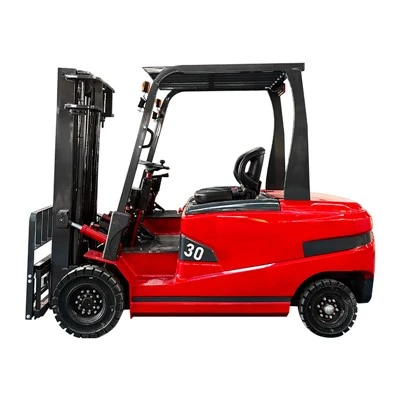
First, let’s set a baseline: what is an electric reach forklift, and how does it compare to its gas-powered counterparts? Unlike internal combustion engine (ICE) reach forklifts, which run on gasoline, diesel, or LPG, ERFs are powered by rechargeable batteries—usually lead-acid or lithium-ion, the latter becoming more common in recent years. They’re designed for narrow-aisle warehouses, a space that’s exploded with the rise of e-commerce, so their environmental impact can’t be judged in a vacuum; it’s tied to how warehouses operate, how electricity is generated, and even how batteries are disposed of at the end of their life.
A big selling point of ERFs is their zero on-site emissions. That might seem obvious, but it’s a game-changer for indoor environments, where ventilation systems for ICE forklifts add energy use and cost. A 2022 study by the Industrial Truck Association found that a single diesel reach forklift emits roughly 6 kilograms of carbon dioxide (CO2) per operating hour, plus small amounts of nitrogen oxides (NOx) and particulate matter—pollutants that contribute to smog and respiratory illness. For a warehouse running 50 hours a week, that’s over 15,000 kg of CO2 a year per forklift. Electric models? They produce zero emissions right where they’re used. That not only improves air quality for workers (a big deal for OSHA compliance, by the way) but eliminates the need for expensive exhaust systems and air filtration, which reduces a facility’s overall energy load.
But here’s where the conversation gets tricky: where does that electricity come from? If a warehouse runs on a grid powered mostly by coal, an ERF’s well-to-wheel carbon footprint is higher than if it’s powered by solar or wind. Let’s do the math on that. According to the U.S. Energy Information Administration, the average grid in the U.S. generates about 0.4 kilograms of CO2 per kilowatt-hour (kWh) of electricity. A typical electric reach forklift uses about 1.5 kWh per operating hour, so that’s 0.6 kg of CO2 per hour—less than the diesel forklift’s 6 kg, but still not zero. But if a warehouse installs on-site solar panels, that number drops to nearly zero. We’ve had clients who paired lithium-ion ERFs with rooftop solar and cut their fleet’s carbon footprint by 90% in two years. That’s a number you can’t get with ICE models, no matter how efficient their engines are.
Battery technology is another key factor here, and it’s one that’s evolved a lot since I started in this business. The old lead-acid batteries in early ERFs had a lot of hidden environmental costs: they’re heavy, take 8 hours to charge (plus a 4-hour cool-down period), and require regular maintenance with distilled water and acid, which can leak if not handled properly. But lithium-ion batteries, which we now offer as an option for most of our models, solve many of those problems. They charge in 1–2 hours, no maintenance required, and when they reach the end of their forklift life (usually 8–10 years), they can be repurposed for energy storage systems—storing excess solar or wind power for warehouses after hours. A 2021 report from the International Energy Agency found that repurposing electric vehicle (and forklift) batteries for energy storage could keep 90% of them out of landfills through 2030. That’s a huge win for sustainability that ICE forklifts can’t match, since their engines are fully disposable at the end of their life.
Of course, no technology is perfect, and ERFs have environmental drawbacks that can’t be ignored. The production of lithium-ion batteries has a higher upfront carbon cost than ICE engines, mostly from mining and processing lithium and cobalt. A 2020 study in the Journal of Cleaner Production found that manufacturing a lithium-ion forklift battery adds about 2,000 kg of CO2 equivalent to a fleet’s footprint—compared to around 1,200 kg for a diesel engine. But here’s the catch: that upfront cost is offset within 1–2 years by lower fuel and maintenance costs, especially if electricity is cheap. And as battery technology improves, that gap is shrinking. We’re already seeing lithium-ion batteries with longer lifespans and lower production emissions, as manufacturers move toward more sustainable mining practices and recycled materials.
Another point many people miss: electric reach forklifts are more energy-efficient overall than ICE models. An electric motor converts about 85% of the electricity it uses into motion, while an ICE engine only converts about 30% of fuel into motion—the rest is lost as heat. That means an ERF uses less energy to do the same work, which translates to lower operating costs and, indirectly, lower emissions. For a warehouse that runs 24/7, that efficiency adds up. I had a client in Atlanta who switched 10 ICE reach forklifts to electric two years ago; their total electricity bill for the fleet went down by 40%, even with higher usage during peak e-commerce season. That’s not just good for their bottom line—it means less demand for electricity, which reduces the need for new power plants.
Now, let’s talk about how businesses can maximize the environmental benefits of ERFs, because it’s not just about buying the forklift itself. First, choose the right battery type. If you’re running a small operation with low usage, lead-acid might still work for you, but if you’re running a high-volume warehouse, lithium-ion is the way to go for efficiency and repurposing. Second, pair your forklifts with renewable energy. Even if your grid isn’t 100% green, installing a few solar panels or switching to a green energy plan from your utility can cut your fleet’s carbon footprint by half or more. Third, invest in battery management systems. These systems optimize charging times, extend battery life, and ensure you’re not wasting energy on overcharging—another small change that adds up.
I’ve heard a lot of skepticism over the years: “Electric forklifts are too expensive,” “They don’t last as long,” “The battery is a hassle.” But those concerns are outdated. We’ve worked with hundreds of businesses to make the switch, and the data shows that ERFs are often the more cost-effective and sustainable choice for narrow-aisle warehouses. A 2023 case study from a major online retailer found that their electric reach forklift fleet reduced their annual carbon emissions by 2,000 metric tons—equivalent to taking 430 cars off the road—while lowering their operating costs by $120,000 a year. That’s a win-win.
Of course, there’s still work to be done. The recycling infrastructure for forklift batteries is still growing, and we need more standards for sustainable battery production. As a supplier, we’re committed to partnering with manufacturers that prioritize recycled materials and ethical mining, and we’re working with local recycling centers to create take-back programs for old batteries. We also offer training for our clients on how to operate their ERFs in the most energy-efficient way—simple things like slower acceleration and proper charging schedules that can reduce energy use by 15%.
At the end of the day, the question isn’t just “Are electric reach forklifts environmentally friendly?” It’s “When are they most environmentally friendly?” For narrow-aisle warehouses, which are the main use case for reach forklifts, ERFs outperform ICE models on every environmental metric—especially as the grid becomes greener and battery technology improves. They’re not a perfect solution, but they’re a clear step forward, and for businesses that are serious about sustainability, they’re one of the most impactful investments you can make.
If you’re considering switching to electric reach forklifts and want to talk through your specific needs—whether that’s fleet size, battery type, or how to pair them with renewable energy—we’re here to help. Our team has years of experience working with warehouses of all sizes, and we can provide customized solutions that fit your budget and sustainability goals. Don’t hesitate to reach out to start the conversation.
Aluminum Alloy Lift References
- Industrial Truck Association. (2022). Environmental Impact of Industrial Lift Trucks.
- U.S. Energy Information Administration. (2023). Annual Energy Outlook.
- International Energy Agency. (2021). Electric Vehicle Battery Lifecycle Assessment.
- Journal of Cleaner Production. (2020). Comparative Life Cycle Analysis of Forklift Technologies.
- Retail Industry Leaders Association. (2023). Sustainable Fleet Management in E-Commerce Warehouses.
Huazheng Heavy Industry Machinery Equipment Co., Ltd.
With abundant experience, we are one of the most professional reach forklift manufacturers and suppliers in China. Please feel free to buy high quality reach forklift for sale here from our factory. We also accept customized orders.
Address: Room 423-101, Building C-4, Electronics Valley Technology Center, No.3088 Lekai North Street, Gaokai District, Baoding City, Hebei Province, China
E-mail: sales02@hzheavy.com
WebSite: https://www.hzheavy.com/
