If you’ve ever walked through a machine shop, a medical manufacturing facility, or even a aerospace assembly floor, you’ve likely run into titanium plates. As someone who’s been in the titanium plate supply business for over a decade, I get asked this question more often than “what grade do you need?” or “how quickly can we ship this?” — “What’s the electrical conductivity of a titanium plate?” Titanium Plate

It’s a fair question. Conductivity matters for so many use cases, from grounding grids in power plants to heat exchangers in chemical processing to specialized electronic enclosures. But the answer isn’t as simple as a single number. Titanium isn’t a pure, one-size-fits-all metal; it’s an alloy, a material shaped by processing, and a component that changes its properties based on how it’s been made. Let’s break this down like I would to a new customer on their first order, no jargon, no fluff.
First, let’s start with the baseline: pure titanium. Unalloyed, commercial purity (CP) titanium, the stuff we sell for everything from decorative trim to marine hardware, has an electrical conductivity that hovers around 2.34 x 10⁶ siemens per meter (S/m) at room temperature. For context, copper — the gold standard for conductivity — comes in at about 59.6 x 10⁶ S/m, aluminum is around 37.7 x 10⁶ S/m, and even steel, which people often think of as high-conductivity, clocks in at roughly 6.9 x 10⁶ S/m. That means pure titanium is only about 4% as conductive as copper, which makes it far from the top of the conductivity charts. But that’s not a flaw — it’s a feature for a lot of applications.
Now, here’s where the plot thickens: almost no one uses pure titanium for structural or industrial parts. We alloy titanium with elements like aluminum, vanadium, nickel, molybdenum, iron, and others to boost strength, corrosion resistance, high-temperature performance, or even ductility. And every single one of those alloying elements changes conductivity. The most common titanium plate alloy is Ti-6Al-4V, or Grade 5 titanium, which makes up more than half of all titanium plate sold globally. Ti-6Al-4V has an electrical conductivity of roughly 2.1 x 10⁶ S/m at room temperature — a tiny drop from pure CP titanium, but measurable. Why? Because alloying introduces atomic imperfections that scatter electrons, which is what electricity travels through in a metal. More imperfections = more scattering = lower conductivity.
That’s a pattern you’ll see across nearly all titanium alloys. Grade 2 titanium, which is a slightly higher-strength, more corrosion-resistant version of CP titanium, has a conductivity around 2.2 x 10⁶ S/m. Grade 7, which is CP titanium with a tiny addition of palladium to resist acidic environments, sits at around 2.0 x 10⁶ S/m. Even the specialty aerospace alloys, like Ti-10V-2Fe-3Al, drop to around 1.8 x 10⁶ S/m. The more alloy we add, the lower the conductivity. It’s a tradeoff we’ve always explained to customers: if you need the highest conductivity possible, you go with a lower-grade, pure titanium plate. If you need strength to hold up under pressure, corrosion resistance in saltwater or chemicals, or performance at high temperatures, you accept a slight drop in electrical conductivity.
But wait — there’s more to the story than alloy grade. The way we process the titanium plate also changes conductivity. I’ve had customers order the same Grade 5 titanium plate from two different suppliers and get different conductivity readings, and when we dug into it, the difference was in how the plate was rolled and heat treated. When titanium is hot rolled (shaped at high temperatures, usually above its recrystallization point) it forms a certain grain structure. Cold rolling, done at room temperature, stretches those grains and adds internal stress, which creates more electron scattering. That can drop conductivity by as much as 5-10% in heavily cold-rolled plates.
Heat treatment does the opposite, in most cases. When we stress relieve a titanium plate, or anneal it (heat it to a specific temperature and cool it slowly), we reduce internal stress and refine grain structure, which lets electrons move a little more freely. Annealed Grade 5 titanium plate, for example, often hits closer to 2.2 x 10⁶ S/m, while the same alloy in a heavily cold-rolled, as-rolled condition might be as low as 1.9 x 10⁶ S/m. It’s a small shift, but for applications that rely on consistent electrical performance — like electrical discharge machining (EDM) or specialized grounding systems — that difference matters. We always test conductivity of every batch we process, so we can share that data with customers who need exact numbers. Temperature also plays a role, by the way. Like most metals, titanium’s conductivity drops as temperature rises. At 100°C, a typical titanium plate is about 5% less conductive than at room temperature, and at 500°C, that jumps to 20%. For high-temperature applications like gas turbine components, we adjust our specifications to account for that drop.
Now, let’s talk about what that conductivity number actually means for your application, because that’s what most customers care about, not just a random figure. If you’re building a lightning protection system for a yacht, titanium’s conductivity is perfect here. It’s strong enough to withstand impact, corrosion-resistant in saltwater, and while it’s not as conductive as copper, it has more than enough conductivity to safely carry lightning current to the ground without overheating or failing. I’ve sold thousands of Grade 2 titanium plates for lightning strike covers on marine vessels, and every customer has come back saying they chose titanium because it doesn’t corrode like copper would in saltwater, even if conductivity is slightly lower.
If you’re building a heat exchanger for a pharmaceutical plant, the slight drop in conductivity is a non-issue. You care about titanium’s resistance to corrosive chemicals and high temperatures, not its ability to carry electrical current. The conductivity is just a secondary property here, not a primary design factor. Where conductivity does matter is in things like electrical contacts, electronic enclosures, or resistance welding fixtures. For these uses, we often recommend Grade 1 or Grade 2 CP titanium plate, because their higher conductivity means less energy is lost as heat during welding or signal transmission. I had a customer a couple of years back making custom electronic shielding enclosures who was using aluminum plate before, but switched to titanium for its light weight and corrosion resistance. They were worried conductivity would be too low, so we tested a sample for them — it hit 2.3 x 10⁶ S/m, which was more than enough for their shielding requirements, and they still got the benefits of titanium.
Common misconceptions I hear all the time: “Titanium is non-conductive” — no, it’s just less conductive than common metals like copper or aluminum. It’s still a good electrical conductor, just not the best. Another one: “All titanium plates have the same conductivity” — nope, as we talked about, alloy, processing, heat treatment, even thickness can play a role. Thinner plates tend to have slightly lower conductivity than thick plates, because more surface area contributes to electron scattering at the edges, though that effect is usually negligible for plates thicker than 1mm.
At the end of the day, the electrical conductivity of a titanium plate isn’t a fixed, static number. It’s a property that depends on grade, processing, and intended use. As a titanium plate supplier, our job isn’t just to give you a number — it’s to match the right titanium plate to your needs. If conductivity is your primary concern, we’ll recommend the purest grade available, with minimal cold rolling and annealed for maximum electron flow. If strength and corrosion resistance matter more, we’ll point you to our Grade 5 or Grade 7 titanium plate, and share the conductivity data so you can confirm it meets your requirements.
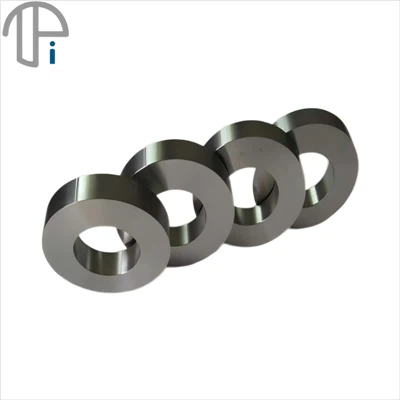
If you’re working on a project where titanium plate is part of your design, and you want to confirm the electrical conductivity, or discuss alloy and processing options to get the exact properties you need, don’t hesitate to reach out. We can send you sample plates with test data, walk through your application requirements, and make sure you get the right product at the right time.
Round Titanium Bar References:
- ASM International. (2000). Properties and Selection: Nonferrous Alloys and Special-Purpose Materials. ASM Handbook Vol. 2.
- Donachie, M. J. (2000). Titanium: A Technical Guide, 2nd Edition. ASM International.
- Ray, S. (1994). Electrical Resistance of Metals. Plenum Press.
- Aerospace Materials Specifications (AMS). (2015). AMS 4911: Titanium Alloy Sheet and Plate, 6Al-4V, Annealed.
Baoji Top Titanium Industry Co., Ltd.
As one of the most professional titanium plate manufacturers and suppliers in China, we’re featured by quality products and good price. Please rest assured to buy bulk titanium plate in stock here and get quotation from our factory. Customized orders are welcome.
Address: No. 2, South Section Of Phoenix 2nd Road,High-Tech Zone, Baoji,Shaanxi, China (Mainland)
E-mail: sales@bjtopti.com
WebSite: https://www.china-topti.com/
