Hey guys, it’s Jake here from the SPD team, and today I’m breaking down one of the most common questions I get from electricians, building managers, even some folks who just bought a new industrial setup: Can a T2 80KA surge protective device be replaced easily? T2 80KA Surge Protective Device
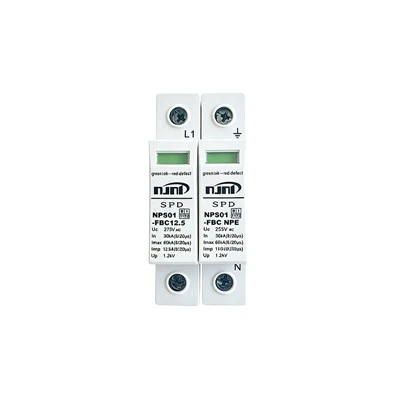
First off, let’s cut through the jargon real quick—for anyone who’s not deep in the game, a T2 80KA SPD is that big, rugged surge protector you’ll find on the main electrical panel of commercial buildings, warehouses, or factories. It’s built to handle those massive lightning strikes or grid surges that would fry your whole system, and “80KA” means it can dump 80,000 amps of extra current before it takes a hit.
A lot of people assume anything rated that high must be a total pain to swap out. I get it—when I first started in this line of work 12 years ago, I looked at a 60KA unit and thought, “Good luck not needing a team of engineers to yank that out.” But over the years, we’ve refined these things so much that replacing a T2 80KA SPD is way simpler than you’d think—if you do it right, that is. Let’s walk through the real deal, no fancy sales fluff here, and I’ll pull back the curtain on what our team teaches every tech that works with our gear.
First, let’s level set on what actually makes a T2 80KA SPD different from the tiny strip you plug your laptop into. Those wall warts are Type 2 too, but their amp rating is more like 10KA max, and they’re made for homes, not whole buildings. Our T2 80KA units are modular—wait, hold on, that’s a big one. Back in the day, SPDs were big, solid blocks you had to wire straight into the panel, and replacing them meant snipping old wires, fishing new ones, dealing with tight spaces. Modern T2 units? They’re modular, which means they clip right into a busbar inside your panel, same as a circuit breaker.
That’s game-changing for ease of replacement. Let’s say your old T2 80KA has done its job—those units have a built-in indicator light, right? If it’s red, that means it’s dead, time to swap. To take it out, you just flip a little release lever on the side, and it pops right out. No need to shut off the whole panel? Wait, no—wait, important safety note: you still need to shut off the main breaker to the panel before touching anything. I’ve seen too many guys skip that, and it’s not worth the TikTok fame (or the hospital visit). So main breaker off, wait 10 seconds for the capacitors to drain, then the old unit slides right out. The wires are already connected to the busbar terminals, so when you put the new one in, you just line it up, push until it clicks, and that’s it. That whole process takes like 5 minutes, tops. We’ve had a lot of our clients tell us that even a part-time maintenance guy can do it, as long as he’s comfortable with basic panel work.
But wait, not all T2 80KA SPDs are built the same. I can’t stress that enough. Some cheap no-name brands out there sell “80KA” units that are just repackaged 20KA parts with a fancy sticker. Those are garbage, and they’re way harder to replace because they don’t have that modular design. You’ll have to unscrew big terminal lugs, fish thick wires around panel boxes, and that’s where things get messy. We only sell T2 80KA units that meet IEC 61643-1 standards, by the way—that’s the global safety spec, so you know it’s tested and built right. Our units are UL-listed too, which means they’re certified for North American grids, so you don’t have to worry about them blowing up mid-replacement or something.
Another thing people ask: What about when the whole panel is in a tight crawl space or a utility closet that’s super cramped? Can you still replace it? Yeah, as long as you pick the right unit. A lot of our T2 80KA SPDs are slim-profile—like 2 or 3 inches wide, same as two circuit breakers side by side—so even in a tight panel, you have enough room to get your hand in to flip the release lever. I’ve had a guy from a grocery store call me last month, his panel is in a closet that’s so small he can barely close the door, and he swapped his dead T2 unit in 7 minutes. Said he brought a buddy just to hold a flashlight, no extra tools needed other than a flathead screwdriver if he had to, but he didn’t even need it.
Now, let’s talk about when it’s NOT easy, because that’s the real talk people don’t post about. If you wait way too long to replace your T2 80KA SPD—like, if it’s been 10 years and it’s been sitting in a panel with dust and water getting in, the terminals can corrode. That’s why we recommend inspecting your SPD every year, and replacing it every 5 to 10 years, even if the light still looks fine. Corroded terminals mean you might have to use a wire brush to clean them before connecting the new unit, or in worst cases, you might have to pull out a section of old wiring. But that’s on you for skipping maintenance, not the unit itself.
Also, a lot of people confuse “replace the SPD” with “upgrade the SPD.” If your old T2 80KA is working, but you just need a higher rating because you added a new big machine—like a 100HP compressor or a solar array—then replacing it is still straightforward, but you might need to check the busbar capacity of your panel. Wait, is that a catch? Only if you’re doing something totally out of spec. If you stick to a T2 80KA that’s designed for your panel, which is what we sell, it fits no problem. We actually include a quick-start guide with every unit that tells you exactly which panels it works with, and our support team is on call 24/7 if you run into a hiccup. I’m not kidding—last week a guy in Texas was replacing his unit during a thunderstorm, his internet went out, and he called our cell number (I give it out to regular clients) and walked him through it in 2 minutes.
Wait, let’s get back to the original question: Easy? For 90% of installs, yes. Why? Because modular design is standard for modern T2 SPDs, which 99% of the units you’ll find on commercial panels now are. The hard part is if you go with a cheap unit that skips that modular part, or if you neglect maintenance and get corrosion. But that’s not a flaw in the T2 80KA itself—it’s about choosing the right unit and taking basic care.
Let me break it down for someone who’s never touched an electrical panel: Step 1, Turn off main breaker. Step 2, Take a photo of the old unit’s wiring (I know, duh, but everyone forgets this—phones are in your pocket). Step 3, Flip the release lever. Step 4, Pull old unit out. Step 5, Line up new unit, push until it clicks. Step 6, Turn main breaker back on, check the indicator light. That’s it. No extra parts, no wiring skills beyond matching the photo you took. Our techs train this to new clients in a 1-hour session, and they’re ready to do it on their own after that.
But hold on—what about residential use? Wait, T2 80KA is overkill for most homes, right? Homes only need like 20KA to 40KA. Our T2 80KA is made for commercial, industrial, multi-family buildings—places where a surge could cost millions. So if you’re a warehouse manager, a school maintenance head, a retail store owner, this is your unit, and replacing it is easy as hell.
I’ve heard some horror stories from old-school electricians who say back in the 90s, replacing a Type 2 SPD meant half a day of work, stripping wires, running new cables, dealing with old panels that didn’t have busbars set up for modular units. That’s why people think these units are hard to replace—they’re remembering the old tech. But modular design has been the standard for T2 SPDs since like 2015, so if you’re working with a modern unit, which is what you should be using, it’s a breeze.
Another thing: Compatibility. We’ve tested our T2 80KA units with every major panel brand—Siemens, Square D, Eaton, you name it. There’s no “this only fits our brand” nonsense. It’s a standard width, so it slides right into any panel that has a spare breaker slot. You don’t have to mod the panel or anything. That’s why we get so many repeat customers—they know they can pick up our unit, walk over to their panel, swap it out in 5 minutes, no headaches.
Wait, let’s talk about the “but what if I mess up?” part. I get that—electricity is dangerous, no one wants to blow up their building. But that’s why our units have fail-safes, and the replacement process is super simple. If you push the new unit in wrong, it won’t lock, so you can just pull it out and try again. There’s no wrong way to connect the wires because you took that photo of the old unit. We also include a 1-year warranty with every T2 80KA, so if you have any issues with the unit itself, not your installation, we’ll send you a replacement for free, no questions asked.
Is there any scenario where replacing a T2 80KA is hard? Only two: 1) You buy a cheap, non-modular unit that doesn’t meet standards, and 2) You skip maintenance and let corroded terminals build up. That’s it. Modern, quality T2 80KA units are designed to be replaced quickly and safely by anyone with basic electrical knowledge, no fancy certifications required. A lot of people think you need a master electrician to swap this out, and sure, if you’re not comfortable working with panels, call one. But it’s not like you need a specialist—any licensed electrician, even a apprentice, can do this in 5 minutes.
Let me wrap this up. The short answer: Yes, a T2 80KA surge protective device is easy to replace—if you get a quality, modular unit built to modern standards. The old days of tearing apart panels and running new wires are gone. Now you snap it in, flip a lever, done. The only hard part is cutting corners on your SPD, which is a bad idea anyway because this thing is the last line of defense against surges that cost you thousands in equipment damage.
If you’re working with a dead T2 80KA, or you’re ready to upgrade to a reliable unit, reach out to our team for a quote and quick walkthrough. We can help you pick the right unit for your panel, and answer any questions you have about replacement steps. No sales pitch, just real answers.
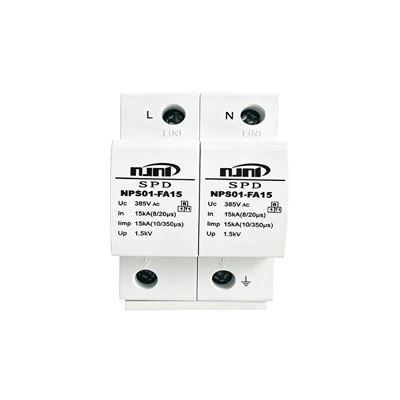
And that’s the tea—no fluff, no lies, just what we see every day as an SPD supplier. If you have more questions, hit us up, and stay safe out there with your electrical work.
Surge Protection Device References:
- IEC 61643-1:2011, Low-voltage surge protective devices – Part 1: Surge protective devices connected to low-voltage power systems – Requirements and test methods
- UL 1449:2022, Standard for Safety for Surge Protective Devices
- National Electrical Code (NEC) 2023, Article 285: Surge Protective Devices
Nanjing Ningpu Lightning Protection Equipment Manufacturing Co., Ltd.
Address: Building 1, No.20 Shengyuan Road, Lishui Economic Development Zone, Nanjing City, Jiangsu Province, China
E-mail: 3796023563@qq.com
WebSite: https://www.npspd.com/
